
Arrest Warrants in Kimble County
Under Texas law, an arrest warrant is a written order from a magistrate telling a peace officer or another named person to arrest someone accused of an offense. A complaint or affidavit backs the probable-cause review. The magistrate issues the paper. The proper clerk keeps the case file, and an authorized officer serves it. Kimble County posts no local application form, no public roster, no set number format, and no universal bond schedule. Felony matters usually land with the 452nd District Court and the District Clerk. Since one office combines the county and district clerk duties, ask which side actually holds your file before you make the trip.
Kimble County Felony Warrant Route
The 452nd Judicial District Court covers Edwards, Kimble, McCulloch, Mason, and Menard counties. Kimble County felony files live on the district side of the clerk's office. The District Clerk page links the court, case indexes, and a criminal payment portal, but it offers no public warrant search. Federal matters follow a different map entirely. The Western District of Texas jurisdiction and venue page places Kimble County in the Austin Division, and that boundary is all it shows. It will not surface a person's case or warrant.
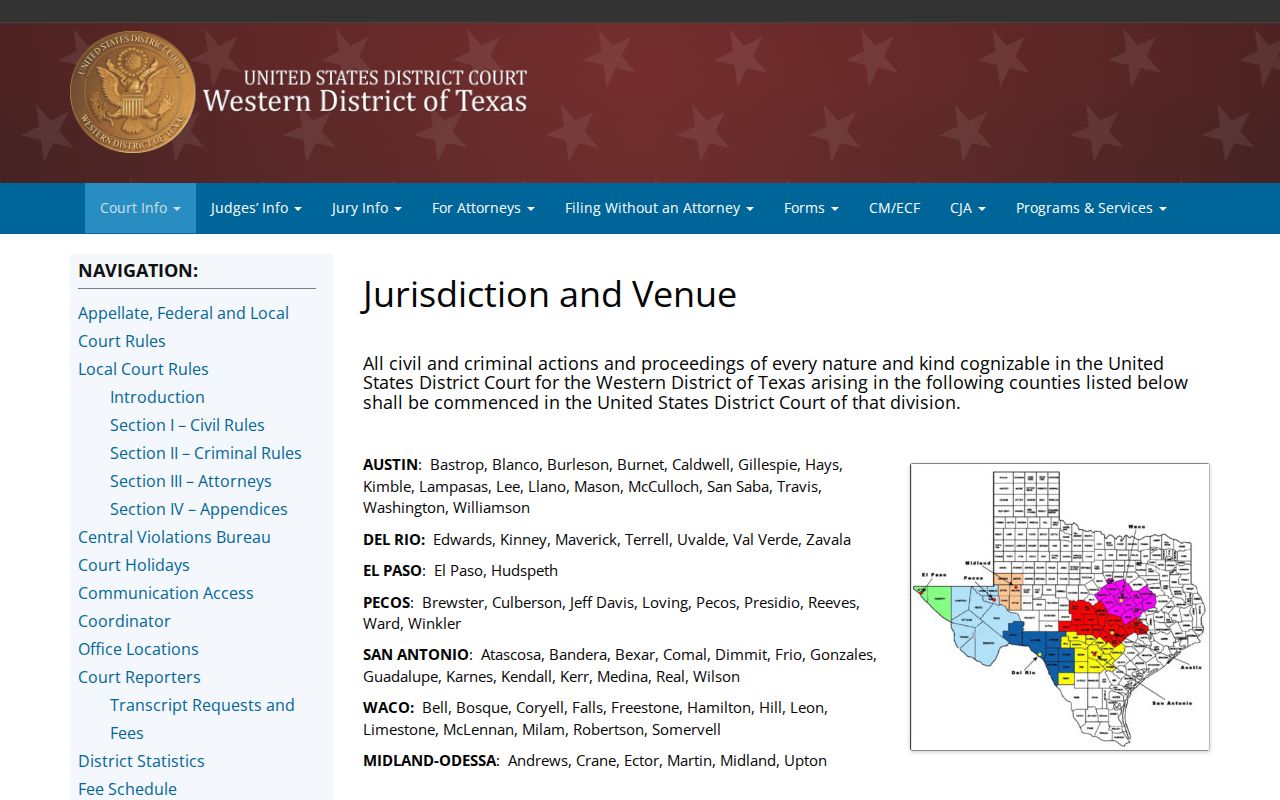
A Texas state case starts with the issuing state court. A federal case runs through a different clerk and a different service route. So the federal map cannot locate a Kimble County state arrest-warrant file.
What a Kimble County Arrest Warrant Contains
Kimble County publishes no sample arrest-warrant entry, so treat the fields below as questions to ask rather than a local screen. Ask the office that keeps the record for the cause number, the issuing court, the process type, any bond order, and the current status. Some papers stay closed. Sealed files, juvenile records, and active investigation details can all be restricted. Ask which portions can be released and whether a lawyer should request the record for you.
| Warrant number | No local format is published; ask for the warrant and cause identifiers. |
|---|---|
| Issuing authority | Confirm the magistrate or court named in the official file. |
| Charge | Ask which public case or offense record is linked, if releasable. |
| Bond terms | Kimble publishes no universal amount or payment method. |
| Status | Ask whether active, served, returned, recalled, or sealed. |
Kimble County Arrest and Service Channels
The Kimble County Sheriff's Office sits at 415 Pecan Street, with a non-emergency phone line and a daily magistrate notice on its page. The Junction Police Department is a separate city agency with its own contacts. Neither office exposes a warrant-status form online. For recall or case questions, only the issuing court controls the outcome. The sheriff page gives the county contact, and the Junction Police Department page covers city policing. A city officer may serve city process. Do not assume the two sites share a public warrant list.
Kimble County Sheriff's Office
415 Pecan Street, Junction
(325) 446-2766
Non-emergency contact; no warrant-specific line is published.
Junction Police Department
(325) 446-4900
City service and custody contact; no online warrant search is published.
How Arrest Warrants Are Served
Arrest under warrant in Texas is governed by Code of Criminal Procedure Chapter 15. When an officer executes the paper, the law requires that authority be made known. The warrant need not be in hand at that moment. It must be shown on request, though, under the statute. After arrest, the person goes before a magistrate for warnings and a bond review. Kimble County's sheriff page posts magistrate court every morning at 9:00 a.m. That notice describes the post-arrest step, not a promise of same-day access for a voluntary surrender. The page lists no booking guide, bond window, or surrender hours.
Kimble County Warrant Magistrate Timing
The sheriff's daily magistrate notice explains what happens right after an arrest in Kimble County. It does not show who has an unserved warrant. It sets no walk-in schedule either, and it cannot replace pre-arrest instructions from the issuing court. For a specific case, call the clerk or your attorney and ask how a surrender would work. Texas Chapter 17 requires a bail decision without unnecessary delay and sets a 48-hour limit after arrest where the law applies. That rule protects a person already arrested and detained. It does not promise a pre-arrest bond arranged by phone.
Arrest Warrant vs Summons vs Bench Warrant
A summons orders a person to appear rather than taking them into custody right away, where the law allows that route. A bench warrant, often tied to failure to appear, is the court enforcing a missed duty. An arrest warrant follows a probable-cause review for an alleged offense. The Kimble County court clerk can confirm which label your case carries. Each route brings different deadlines and conditions. Ask which court issued the process and whether a bond, an appearance, or an attorney motion is needed.
| Process | Why It Is Used | Kimble Contact |
|---|---|---|
| Arrest warrant | Probable-cause arrest authority | Sheriff and issuing court |
| Summons | Directs appearance when allowed | Office named on notice |
| Bench or FTA warrant | Missed court duty or failure to comply | Court that set the case |
Kimble County Federal Warrant Route
Kimble County sits in the Austin Division of the U.S. District Court for the Western District of Texas. Federal warrants come from federal judges or magistrates. The U.S. Marshals Service or authorized partners may serve them. The Kimble County sheriff's page is not a federal warrant search. The federal docket can be searched through PACER, but a warrant may stay sealed until service. PACER also charges for some access. The PACER pricing page spells out the current fee rules and their limits, which is all it covers.
The Lone Star Fugitive Task Force is a federal and local partner program aimed at serious fugitive investigations. It is not a public Kimble County roster. Take a federal question to the issuing court, the USMS, or counsel.
What to Do If There's a Warrant for You
Pick up the phone before you do anything else. Call the Kimble County court that issued the warrant and ask exactly what process is on file, since a third-party warrant lookup or a surprise walk to a counter can leave you worse off. A licensed Texas attorney can arrange contact, file a motion, or set up a surrender on your behalf. Ask the clerk to confirm the bond terms, where you must appear, and which record will show a recall. Kimble County posts no bond schedule and no local recall form. If you are arrested, request the magistrate process, ask for counsel, and get your next court setting in writing.
Before acting: Confirm the case and surrender steps with the issuing court or an attorney. Bond can secure release without ending the case.
Kimble County Warrant Access Moves
The old Kimble County courthouse has been through a restoration, and that moved some doors. The District and County Clerk now receive the public at 105 Reid Road. The JP sits at 415 Main Street. The district courtroom is at the Stevenson Center, 440 N US Highway 83, per the current court page. A Texas Historical Commission release documents the preservation grant behind the project. Call ahead, because a docket room and a clerk counter may sit at different sites on the same day.

Call the clerk on the day you plan to visit a Kimble County office. The docket room and the clerk counter may sit at different sites.