
Bench Warrants in Kimble County
People call it a bench warrant when a court issues arrest process because someone missed a hearing or ignored a court order. Kimble County keeps the case file with whichever court set the matter. A traffic ticket or Class C case may sit with the JP court or the Junction Municipal Court. A county-level misdemeanor or felony runs through a different clerk. Before you assume anything, ask the clerk for the exact docket label. An unpaid fine can produce a capias pro fine instead. Knowing which one you face tells you whether the fix is an appearance, a payment, a bond, or a motion, and the court staff can explain the difference when you call.
Kimble County Traffic Bench Warrants
Traffic and Class C citations in Kimble County route to one countywide JP court. Its official page handles both DPS and county tickets, and it links payment and collection reports. You will find the office at 415 Main Street, and Judge Josh Cant's listed phone is (325) 446-2281. The page offers no bench-warrant search and no recall form. The JP's official page works best as a contact and routing tool. A payment link can settle a balance, but only if the court confirms it applies to your case. Ask whether a missed court date triggered FTA process or a capias pro fine before you pay anything.
How a Kimble County Bench Warrant Is Issued
Several things can trigger court process in Kimble County: a missed date, an unpaid fine judgment, a contempt order, or a failure to comply. For justice and municipal courts, Texas Code of Criminal Procedure Chapter 45A sets the notice and recall rules for covered failure-to-appear cases. A judge issues the arrest process. The county's public pages, though, describe no automatic local trigger and no warrant status code. For an initial covered FTA warrant, state law requires notice with a new appearance date and, in certain circumstances, information about alternatives. Ask the court directly which notice applies to you, whether it has issued process, and what date or order now sits on file.
Kimble County FTA Warrant Recall
Chapter 45A lets a person who cannot appear ask the court for another date. It also requires a justice or municipal judge to recall a covered FTA arrest warrant when the defendant voluntarily appears before execution and makes a good-faith effort to resolve the case. The statute does not publish Kimble County walk-in hours. It also cannot promise that showing up means avoiding arrest. So call the clerk first and ask whether you need an appointment, a motion, a payment, or a court setting. The Texas statute gives the framework; the issuing court gives the local instructions.
Call first: Kimble publishes no surrender entrance, bond window, or walk-in schedule. Confirm the court, location, and conditions before traveling.
Bench Warrant vs Arrest Warrant
Both kinds of warrant can end in arrest, but the reason and the stage differ. A bench or FTA warrant follows a missed court duty, like a skipped setting. An arrest warrant follows a probable-cause review tied to an alleged offense. Kimble County publishes no sample entry, so the clerk should confirm the official label on your case. The terms point you to the right next question: is this process tied to a citation or to an underlying criminal charge, and which court has power to recall it?
| Question | Bench or FTA Process | Arrest Warrant |
|---|---|---|
| Common trigger | Missed appearance or court duty | Magistrate's probable-cause finding |
| Kimble record holder | The court that set the matter | Court or clerk tied to the charge |
| First status contact | JP, Junction Municipal, County, or District Clerk | Sheriff and issuing court |
| Resolution | Reset, appearance, payment, bond, or recall as ordered | Attorney, surrender and bond instructions, or court motion |
Kimble County Warrant Case Index
For case records, the County and District Clerk point to IDocket, Tyler, and Texas re:SearchTX. Treat these as lookup tools for case files, not as a live FTA warrant list. The statewide judicial directory can help you spot which court handles a matter, and Texas re:SearchTX indexes public case material within its scope. None of these guarantee a current warrant status for every Kimble County lower court. The re:SearchTX portal itself offers general court search controls for finding a cause number, not warrant fields.
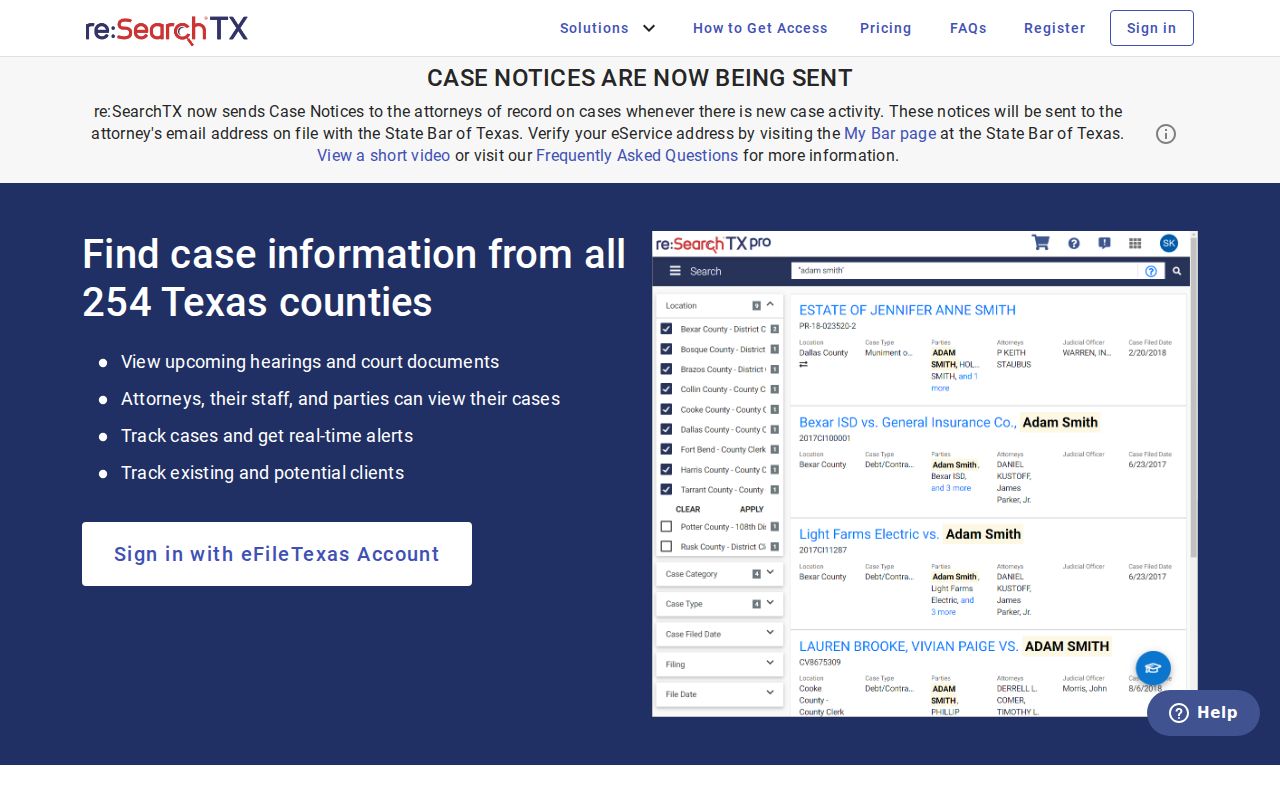
Treat an index result as a lead only. Call the Kimble County court to confirm whether process was issued or recalled.
How to Resolve a Kimble County Bench Warrant
Call the clerk before you visit any office. Ask the process type, the court, the cause or citation number, the amount due or bond conditions, and whether you can set a voluntary appearance. Bring identification and case papers if the court requests them; Kimble County has published no official ID checklist. Once you appear or pay, ask for the docket entry or written confirmation that the warrant was recalled, and learn your next date. Keep in mind that a payment may settle a judgment while the underlying case stays open.
- Identify the court and the exact process label.
- Ask whether a reset or voluntary appearance is available.
- Confirm any balance, bond, collection fee, or required motion.
- Get the court's location and current hours for that setting.
- Keep a receipt, recall order, and new court date.
Kimble County FTA Warrant Records
When a Kimble County court's name is unclear, the Office of Court Administration directory sorts it out. Filter by court type and county. That narrows the results to the right official listing and its contact details. Remember, this is a directory rather than a warrant database, so it will not show any active warrant or bench warrant for a person. The directory page itself displays those filter options, which is what the official site illustrates for visitors.
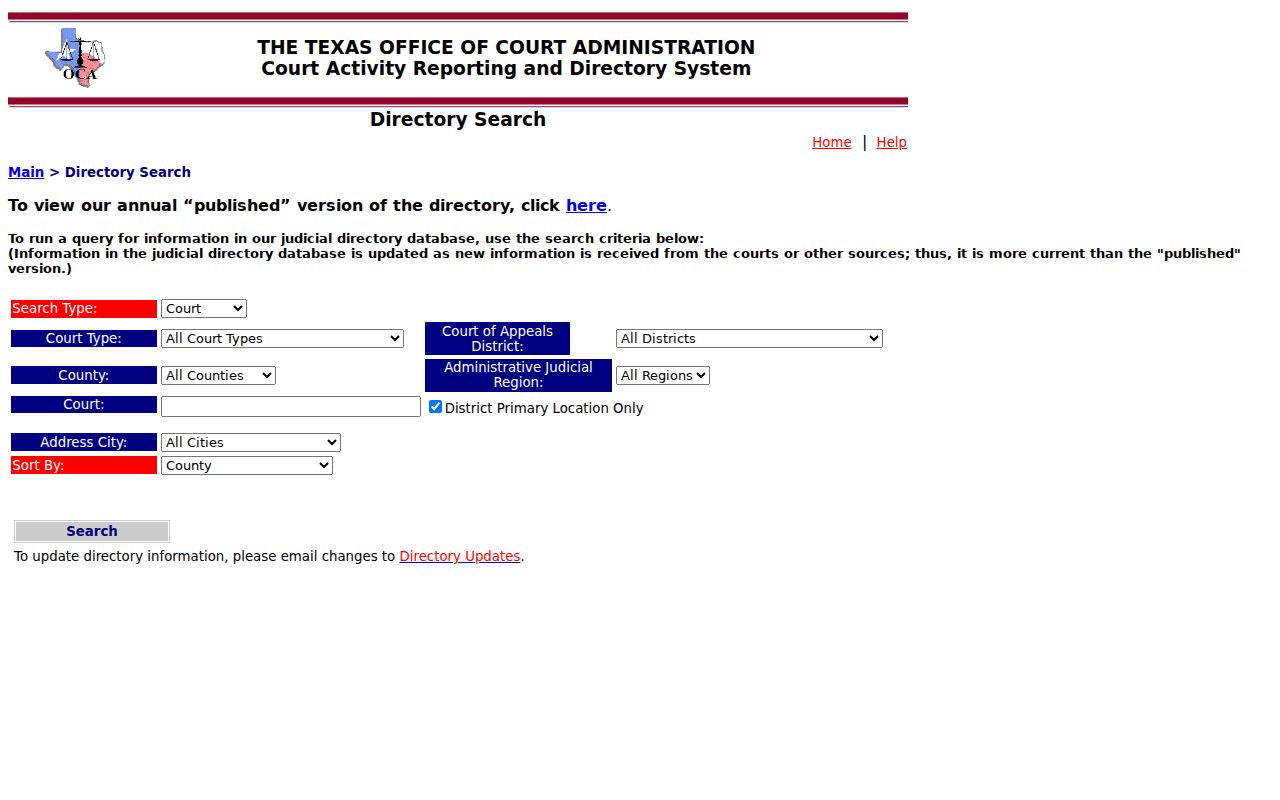
Note: A court directory can identify an office, but only that court can confirm its current case record.
Kimble County Warrant Court
The route depends on the case type and citation. One elected clerk handles both County and District Clerk functions, though each side keeps its own files. Public-facing locations shifted during the courthouse restoration. Before calling, use this quick map.
| Court | Typical Kimble Matter | Contact |
|---|---|---|
| 452nd District Court | Felony and district matters | Clerk (325) 446-3353 |
| County Court | County misdemeanor process | Clerk (325) 446-3353 |
| Countywide JP | County or DPS ticket, Class C, FTA | (325) 446-2281 |
| Junction Municipal Court | City ordinance and traffic case | (325) 446-4473 |
Kimble County Capias Pro Fine Warrants
A capias pro fine warrant is what a Kimble County court issues when a fine or court cost has gone unpaid. Chapter 45A requires the paperwork to state the judgment amount and order an officer to bring the defendant before the court, or hold that person until the next business day when an immediate appearance cannot happen. So the label is not a catch-all for every missed date. It targets money owed. In Kimble County, the JP court and Junction Municipal Court keep their own traffic and Class C records, so a warrant check with each office is the way to learn where a case sits. Ask the clerk whether the account has gone to a collection referral. County commissioner materials mention a 30 percent collection fee on certain delinquent debts. Only the court itself can say whether that fee applies to your case.